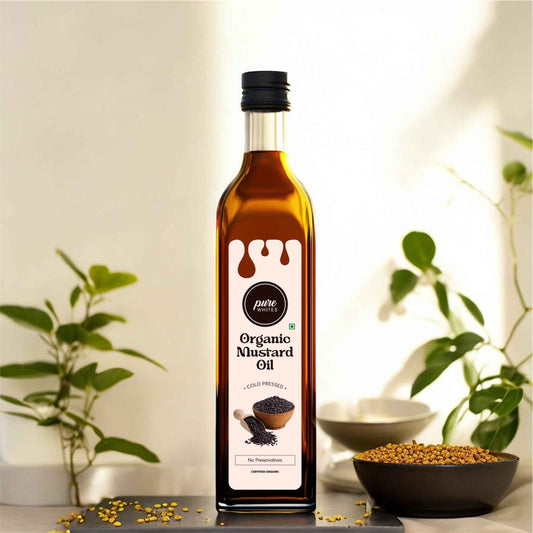
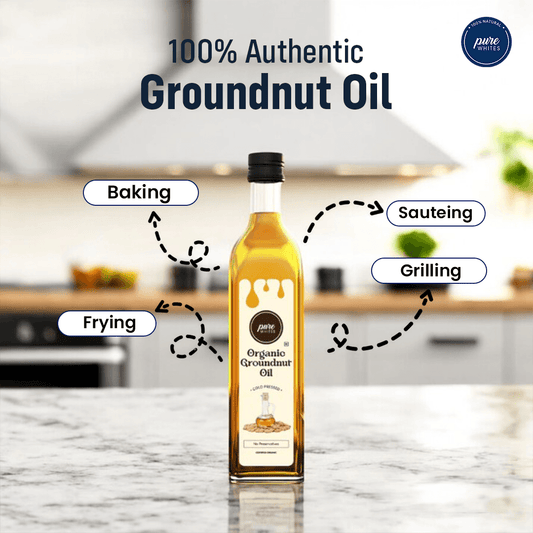
Mustard oil is considered healthier than groundnut, sunflower, and sesame oils because it has a better balance of monounsaturated and polyunsaturated fats, natural antioxidants, and omega-3 fatty acids. Cold-pressed mustard oil is also less refined, making it more suitable for daily Indian cooking when used in moderation.
Choosing the right cooking oil can feel confusing. Labels promise “heart healthy,” “light,” or “cholesterol free.” But health doesn’t come from marketing; it comes from fat composition, processing method, and suitability for your cuisine. Let’s compare the four most commonly used oils in Indian kitchens and see which one truly stands out.
🧪 How We’re Comparing These Oils
We’ll look at:
-
Fat profile (MUFA, PUFA, Omega-3/6)
-
Processing (refined vs cold-pressed)
-
Stability for Indian cooking
-
Everyday health impact
🌿 1. Mustard Oil (Cold-Pressed)
Why it stands out
-
Rich in MUFA (good fats) and Omega-3 fatty acids
-
Naturally contains antioxidants and antibacterial compounds
-
High smoke point → suitable for Indian cooking
-
Traditionally cold-pressed (kacchi ghani)
Health benefits
-
Supports heart health
-
Helps maintain a healthy fat balance
-
Aids digestion and metabolism
💡 Cold-pressed mustard oil is closest to what Ayurveda recommends for daily use.
🥜 2. Groundnut (Peanut) Oil
What it does well
-
High in MUFA
-
Mild taste
-
Decent heat stability
Limitations
-
Low Omega-3 content
-
Often refined
-
Can be heavy if used excessively
💡 Good for occasional frying, but nutritionally less diverse than mustard oil.
🌻 3. Sunflower Oil
Common but controversial
-
High in Omega-6 fats
-
Usually heavily refined
-
Neutral taste
Concerns
-
Excess Omega-6 may promote inflammation
-
Refining removes antioxidants
-
Not ideal for high-heat Indian cooking
💡 Popular due to marketing, not nutrition.
🌰 4. Sesame (Til) Oil
Traditional & therapeutic
-
Rich in antioxidants like sesamol
-
Warming oil, good in small quantities
- Common in South Indian cooking
Limitations
-
Low Omega-3
-
Strong flavour limits daily use
-
Better as a complementary oil, not the main one
💡 Excellent medicinal oil, but not ideal as your only daily cooking oil.
📊 Quick Comparison Table
|
Oil |
Fat Balance |
Omega-3 |
Processing |
Best Use |
|
Mustard Oil |
Excellent |
High |
Cold-pressed |
Daily Indian cooking |
|
Groundnut Oil |
Good |
Low |
Often refined |
Frying |
|
Sunflower Oil |
Poor balance |
None |
Refined |
Occasional use |
|
Sesame Oil |
Moderate |
Low |
Cold-pressed |
Medicinal / flavouring |
🧠 So… Which Oil Is Healthier?
If you’re looking for one oil for everyday cooking, cold-pressed mustard oil clearly stands out:
-
Balanced fats
-
Less refined
-
High heat stability
-
Backed by tradition and modern nutrition
The others have their place but not as your primary oil.
✅ Final Thoughts
Health doesn’t mean switching oils every few months—it means choosing one stable, balanced oil and using it wisely. For Indian kitchens, cold-pressed mustard oil remains one of the most nutritionally sound choices.
🌿 Looking for pure, cold-pressed mustard oil made the traditional way?
👉 Try Pure Whites Cold-Pressed Black Mustard Oil