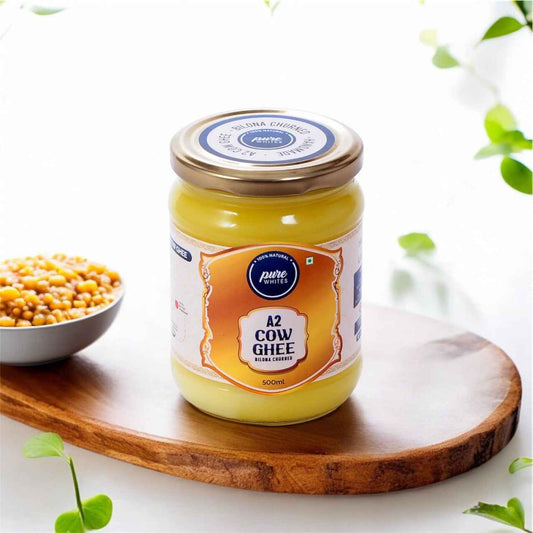
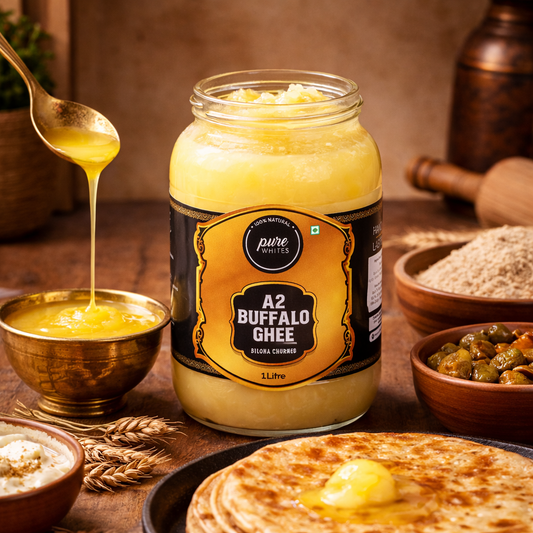
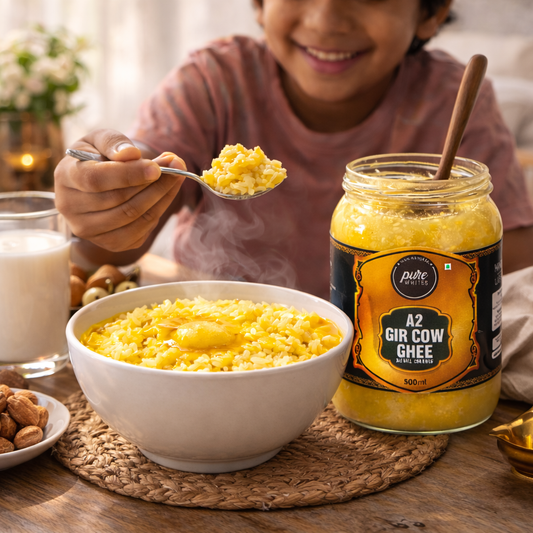
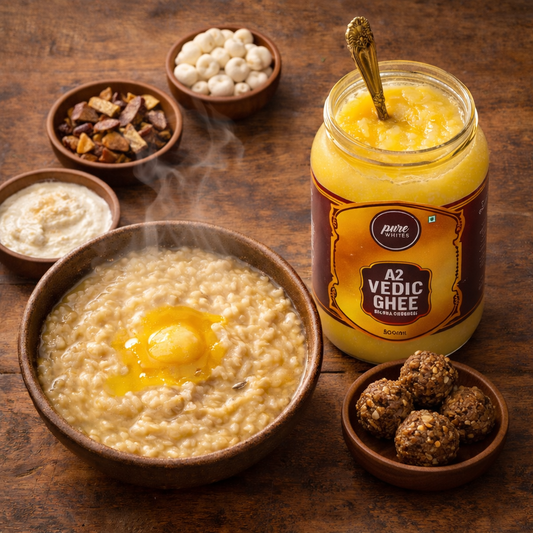
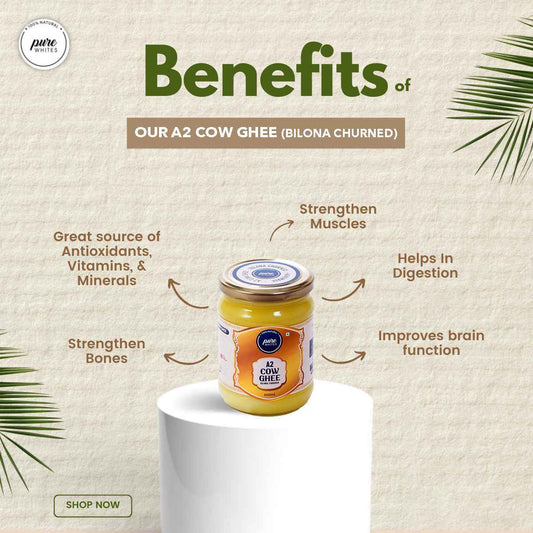
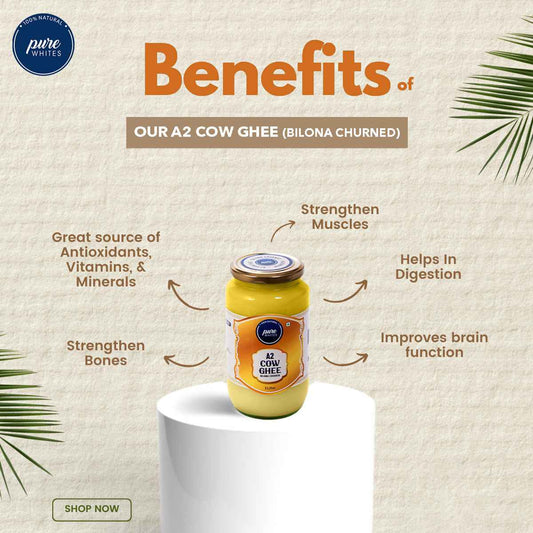
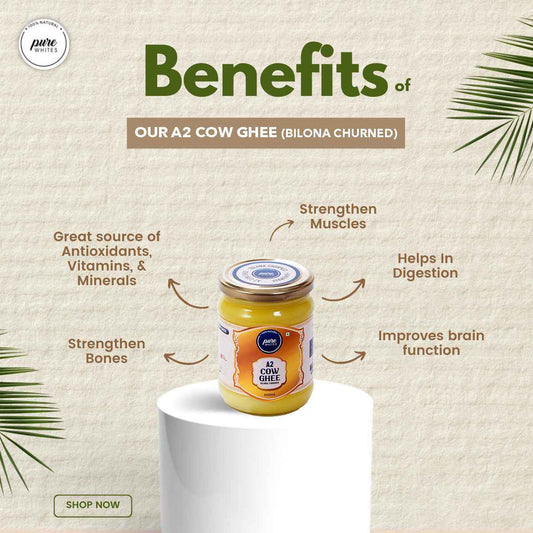
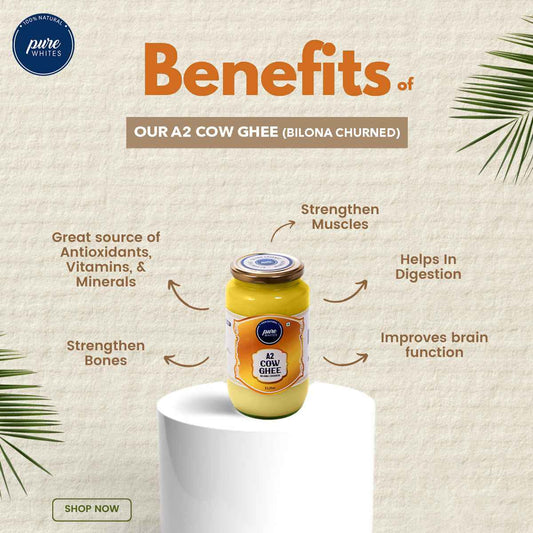
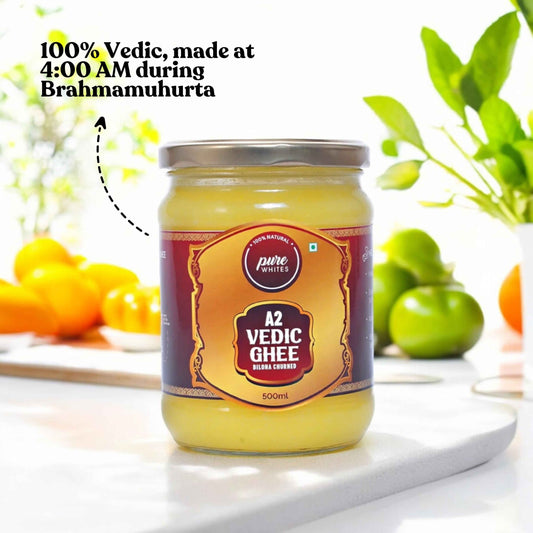
A2 desi cow ghee is made from the milk of indigenous Indian cow breeds that naturally produce A2 beta-casein protein. The breed matters because desi cows give nutrient-dense milk rich in beta-carotene, Omega-3 fatty acids, and beneficial enzymes making A2 ghee more digestible, nutritious, and aligned with Ayurveda compared to ghee made from foreign cow breeds.
🐄 Why Does the Cow Breed Matter in Ghee?
Not all cows produce the same milk.
The breed of the cow directly decides the quality of milk, and that milk ultimately decides the quality of ghee.
Desi Indian cows like Gir, Sahiwal, Tharparkar, Red Sindhi, etc. produce what is often called “super milk”- milk that is naturally richer, purer, and more compatible with the human body.
This is why authentic A2 ghee always starts with desi cow milk, not crossbred or foreign breeds.
🧬 1. Desi Cows Produce Only A2 Milk
Desi cows naturally produce A2 beta-casein protein, while foreign breeds (like Jersey or Holstein Friesian) produce A1 protein.
Why this matters:
-
A2 protein is easier to digest
-
It does not release BCM-7, a compound linked to inflammation and gut discomfort
-
Ayurveda recognizes only A2 milk as suitable for daily consumption
💡 True A2 ghee can only come from true A2 milk and that depends entirely on the cow breed.
🥛 2. Desi Cow Milk Is Nutrient Rich “Super Milk”
Desi cow milk differs in quality, not just quantity.
Desi cow milk is naturally rich in:
-
Beta-carotene (gives A2 ghee its golden yellow color)
-
Omega-3 fatty acids
-
CLA (Conjugated Linoleic Acid)
-
Natural antioxidants and enzymes
This nutrient richness carries forward into the ghee, making A2 desi cow ghee far superior to regular ghee made from high-yield cows.
🌿 3. Lower Milk Yield = Higher Quality
Desi cows produce:
-
Only 4–6 liters of milk per day
Foreign or crossbred cows produce:
-
20–30 liters per day
Lower yield means:
-
Milk is more concentrated
-
Cows are not pushed with hormones
-
Nutrition is prioritized over quantity
💡 Less milk, more nutrition that’s the hallmark of desi cow milk.
🧘 4. Ayurveda Recognizes Desi Cow Milk & Ghee as Medicinal
In Ayurveda:
-
Cow ghee is referred to as “Ghrita”
-
But the cow described is an indigenous Indian cow
A2 desi cow ghee is used in:
-
Panchakarma therapies
-
Digestive healing
-
Brain and nervous system nourishment
-
Hormonal balance and immunity support
Foreign cow ghee has no such Ayurvedic reference.
🧈 5. Desi Cow Milk Responds Best to the Bilona Method
The traditional bilona process (milk → curd → slow churning → butter → ghee) works best with desi cow milk because:
-
It forms stronger curd
-
Butter separates naturally
-
Aroma and grainy (danedar) texture develop properly
Milk from foreign breeds often lacks this natural response, which is why most commercial ghee skips the bilona process altogether.
🔥 6. Better Digestion, Better Absorption
A2 desi cow ghee made from desi cow milk:
-
Contains higher butyric acid
-
Supports gut lining health
-
Improves nutrient absorption
-
Is gentle for kids, elders, and sensitive digestion
💡 This is why many people who can’t tolerate regular ghee feel comfortable with A2 desi cow ghee.
✅ Final Thoughts
A2 ghee isn’t just about the method, it starts with the right cow.
Desi cows produce milk that is richer, purer, and more aligned with human biology and Ayurveda.
That’s why A2 desi cow ghee made from desi cow’s super milk is not just better ghee, it’s food as nature intended.
🥄 Experience Pure Whites A2 Gir Cow Ghee made from desi cow milk, the traditional way
👉 BUY NOW